

The combination of the tyrosine kinase inhibitor tucatinib with standard of care based on trastuzumab and pertuzumab significantly delayed disease progression and the need to resume citotoxic therapy in patients with HER2+ metastatic breast cancer, as shown by data recently published on Journal of Clinical Oncology.
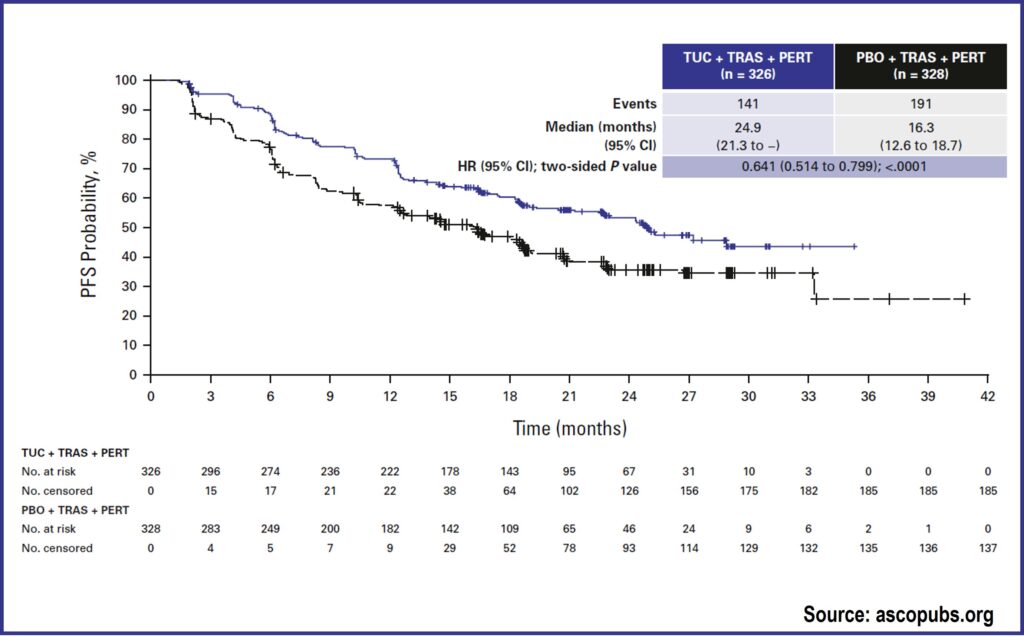
In the phase 3 HER2CLIMB-05 trial a total of 654 patients with HER2+ metastatic breast cancer were randomized to receive either tucatinib or placebo in combination with trastuzumab/pertuzumab. In the primary analysis recently published, median progression-free survival was 24.9 months with tucatinib and 16.3 months with placebo, with a statistically significant benefit regardless of presence/absence of brain metastases or hormone receptor status; overall survival data remained immature, but no new safety signals were identified. As authors say, «Adding tucatinib to trastuzumab and pertuzumab as first line maintenance therapy for the treatment of patients with HER2+ metastatic breast cancer with no evidence of progression after completion of induction therapy with trastuzumab, pertuzumab, and a taxane resulted in statistically significant improvement in progression-free survival, with a 36% reduced risk of disease progression or death compared with first line trastuzumab and pertuzumab maintenance therapy».
The combination of the tyrosine kinase inhibitor tucatinib with standard of care based on trastuzumab and pertuzumab significantly delayed disease progression and the need to resume citotoxic therapy in patients with HER2+ metastatic breast cancer, as shown by data recently published on Journal of Clinical Oncology.
In the phase 3 HER2CLIMB-05 trial a total of 654 patients with HER2+ metastatic breast cancer were randomized to receive either tucatinib or placebo in combination with trastuzumab/pertuzumab. In the primary analysis recently published, median progression-free survival was 24.9 months with tucatinib and 16.3 months with placebo, with a statistically significant benefit regardless of presence/absence of brain metastases or hormone receptor status; overall survival data remained immature, but no new safety signals were identified. As authors say, «Adding tucatinib to trastuzumab and pertuzumab as first line maintenance therapy for the treatment of patients with HER2+ metastatic breast cancer with no evidence of progression after completion of induction therapy with trastuzumab, pertuzumab, and a taxane resulted in statistically significant improvement in progression-free survival, with a 36% reduced risk of disease progression or death compared with first line trastuzumab and pertuzumab maintenance therapy».