

A new study led by researchers collaborating with Fondazione Michelangelo, recently published on JAMA Network Open, suggests that duration of prior CDK4/6 inhibitor therapy and the presence of visceral involvement are key factors associated with survival in hormone receptor–positive, ERBB2–negative metastatic breast cancer patients progressing while receiving endocrine therapy plus CDK4/6 inhibitors.
This multicenter retrospective study included 506 patients with HR+/ERBB2- metastatic breast cancer who received endocrine therapy or chemotherapy following progression during endocrine therapy plus CDK4/6 inhibitors. The primary endpoint was progression-free survival, defined as the time between the initiation of the first systemic treatment on tumor progression to endocrine therapy plus CDK4/6 inhibitors treatment and the detection of disease progression or patient death from any cause; the secondary endpoint was overall survival. Results show that independent factors associated with poorer progression-free survival outcomes were visceral metastases and de novo metastatic disease; a longer duration of CDK4/6 inhibitors therapy and an older age were associated with better outcomes. Both intravenous chemotherapy and endocrine therapy were associated with shorter progression-free survival compared with oral chemotherapy, whereas a duration of CDK4/6 inhibitors treatment exceeding 12 months was associated with longer overall survival. Among patients with visceral metastases, intravenous chemotherapy was associated with shorter overall survival compared with oral chemotherapy. «Our findings suggest that oral chemotherapy could be a preferred option for select patients with visceral metastases, offering comparable survival outcomes with potentially fewer adverse effects and greater convenience than endovenous chemotherapy», authors say. «Further research is warranted to confirm these findings and explore the potential benefits of personalized treatment approaches, particularly considering the duration of CDK4/6i therapy and the presence of visceral metastases».
A new study led by researchers collaborating with Fondazione Michelangelo, recently published on JAMA Network Open, suggests that duration of prior CDK4/6 inhibitor therapy and the presence of visceral involvement are key factors associated with survival in hormone receptor–positive, ERBB2–negative metastatic breast cancer patients progressing while receiving endocrine therapy plus CDK4/6 inhibitors.
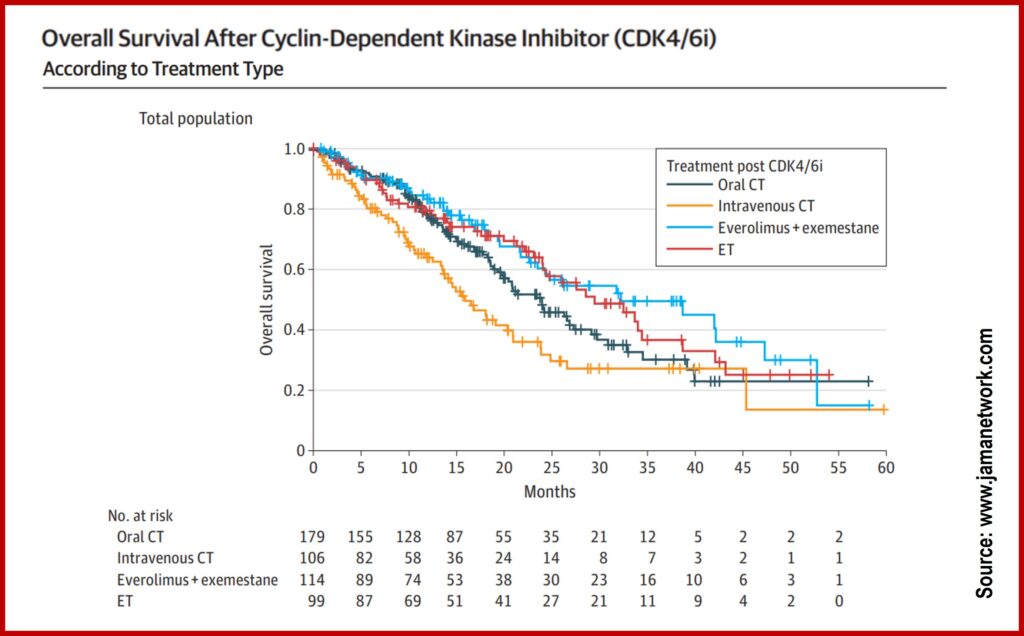
This multicenter retrospective study included 506 patients with HR+/ERBB2- metastatic breast cancer who received endocrine therapy or chemotherapy following progression during endocrine therapy plus CDK4/6 inhibitors. The primary endpoint was progression-free survival, defined as the time between the initiation of the first systemic treatment on tumor progression to endocrine therapy plus CDK4/6 inhibitors treatment and the detection of disease progression or patient death from any cause; the secondary endpoint was overall survival. Results show that independent factors associated with poorer progression-free survival outcomes were visceral metastases and de novo metastatic disease; a longer duration of CDK4/6 inhibitors therapy and an older age were associated with better outcomes. Both intravenous chemotherapy and endocrine therapy were associated with shorter progression-free survival compared with oral chemotherapy, whereas a duration of CDK4/6 inhibitors treatment exceeding 12 months was associated with longer overall survival. Among patients with visceral metastases, intravenous chemotherapy was associated with shorter overall survival compared with oral chemotherapy. «Our findings suggest that oral chemotherapy could be a preferred option for select patients with visceral metastases, offering comparable survival outcomes with potentially fewer adverse effects and greater convenience than endovenous chemotherapy», authors say. «Further research is warranted to confirm these findings and explore the potential benefits of personalized treatment approaches, particularly considering the duration of CDK4/6i therapy and the presence of visceral metastases».